Showing posts with label Ramblings. Show all posts

Tuesday, August 9, 2016

Needed: Students

This is it.

The day before school starts.  Or, as I like to call it, the night that I am almost guaranteed to toss and turn relentlessly and NEVER get enough rest.

Even though I am 36 years old, been through years of elementary, middle, and high school, college, and graduate school, as well as taught for 11 and 1/2 years, I still have a certain level of anxiety about the first day of school.  Absurd questions invade my mind, like: will my hair look like Cory Matthews' in this early Boy Meets World episode?...


...will my classroom technology seem as out of date as Zack Morris' cell phone?...


...will this be the response to my class by my new students?


Usually, everything turns out just fine, but you never know.

What I do know is this: I AM READY FOR THE STUDENTS TO GET HERE!  Listen, if there is ever a need to devise a plan that will dissuade folks from becoming teachers, tell prospective educators to come hang out at school the days just BEFORE school starts and AFTER school is over.  Sheesh.  It's bad.  

Thankfully, school is all about the students.  

One more time for it to sink in...

SCHOOL. IS. ALL. ABOUT. THE. STUDENTS.  


I think I am ready.  All I need are the kids!  Let's do this.  

Here's to the best year ever.

~Mr. D


Thursday, August 4, 2016

Open House

If there was any doubt that the first day of school was quickly approaching, Open House surely squashed any uncertainty.

I have been known to create classroom-centered podcasts throughout the course of a school year, available for free at the iTunes Store.  To find them, simply search for Jason Davidson's Podcasts within the iTunes Store search bar.  I deleted all of last year's podcasts, except for one.  Just for kicks and giggles on this Throwback Tuesday, here is the podcast I recorded nearly two years ago after the 2012 Open House.  It's only five minutes long but I couldn't record anything this year that would communicate my sincere feelings about how I revere my position as your (or your child's) teacher any better.  Enjoy!

TheMrDShow Podcast: Episode One - Open House Perspective

Sunday, June 5, 2016

Get Closer

I stumbled across this video on accident after searching for the video for the song that you hear in the background, which is "The Funeral" by Band of Horses (one of my personal favorites).   It features a young disabled man who feels lonely a lot in life mainly because people don't often approach him.  Specifically, when he rides the city bus, the seat next to him is often vacant.

So he put on a bear suit.  I love what happens next.  Enjoy.


Get closer.

~Mr. D

Saturday, June 4, 2016

For Those Looking for Career Advice

One of my favorite movies as a kid was "Ace Ventura: Pet Detective."  It began my cinematic love affair with actor/comedian Jim Carrey, whom I had gotten to know through "In Living Color."  Most students are probably more familiar with him as the chip-toothed goofball in "Dumb and Dumber," but in this video, he is much more serious.

The only thing goofy about this career-path advice is the hat they put on him to deliver this commencement address:


I admit: part of me was waiting for him to turn around and at least deliver portions of that speech out of his butt.  Alas, Jim is all grown up.

~Mr. D

Friday, June 3, 2016

Wikipedia: It's Not a Dirty Word

Continuing on with my posts regarding educational technology as we gear up for another school year, this post focuses on Wikipedia.

For years since I left Western Kentucky University (2003), Wikipedia has gained increasing momentum, filling up so much space on the web that a person couldn't possibly read all of its voluminous entries in a single lifetime.  However, it has gained nearly as many detractors since its inception, especially in the realm of education.

Below is an article from Dr. Scott McLeod outlining how to change administrative perception of Wikipedia.  Let's do it:


Teaching administrators about Wikipedia


Last year a middle school librarian in New Jersey received a lot of media attention for her anti-Wikipedia campaign:
Linda O'Connor regards Wikipedia the same way former first lady Nancy Reagan campaigned against drugs. . . . She put up a sign saying "Just Say No to Wikipedia" over the computers in the school library. . . . Wikipedia is blocked on all computers in the Warren Hills Regional School District.

At the time I said that I was highly skeptical about this librarian's stance. On any given day, approximately 1 in 10 Internet users visits Wikipedia. This fact alone should indicate that there's something going on worth paying attention to, something that warrants a more nuanced approach than simply prohibiting access. If it was terrible, it wouldn’t maintain its audience. Folks who take the time to understand Wikipedia learn very quickly that it's actually an amazing site. It's already 8 times larger than the Encyclopedia Brittanica, is growing incredibly quickly, and has been created entirely by volunteers. Peer-reviewed studies published in our top scientific journals have shown that it is as accurate as the Brittanica too, particularly those articles that reside in its mainstream core (rather than at the fringes).
If all of this is true, then why are so many educators, librarians, and media specialists upset about Wikipedia? I think the concerns stem from several different sources. One is their beliefs about accuracy. We tend to assume that print materials such as the Brittanica and school textbooks are error-free when in actuality they contain numerous mistakes. Even when identified, these mistakes usually linger until the next edition is printed and purchased (unlike Wikipedia which corrects known mistakes almost instantly). Second, the idea that volunteers can create something as valuable as that created by experts strikes us as ludicrous. But in this case it happens to be true. Sure, at any given second, some vandal or incompetent may have inserted something inaccurate into a particular article. But over time (and often unbelievably quickly), Wikipedia is remarkably self-healing, unlike the paper materials on our bookshelves. Wikipedia also is a counter to outdated information. How many of the reference books in libraries and school media centers contain incomplete or inaccurate information simply because they're old? Wikipedia doesn't have that problem.
Our students deserve better training about how to navigate our new, complex, online information landscape. They don't learn about information literacy, bias, media literacy, assessment of online validity, and other critical online skills by being denied access to that information. They don't learn how to cite and use online resources appropriately if they can't use those resources and learn from their mistakes because the materials are banned.
If you take half an hour to show administrators these things, their mindset changes. I like to have school leaders visit some Wikipedia pages with me. I start by showing them the asphalt article. After we look at the article itself, I show them the history tab (and take them all the way back to the first few revisions) and then the discussion tab. We talk about what we see and what their perceptions are regarding accuracy, quality, and neutrality. Then I put them into groups to check out more controversial articles like Sarah PalinIslamVladimir Putin, orPluto. They examine the articles for bias and inaccuracy and spend some time in the history and discussion areas.
The administrators inevitably walk away with a deeper understanding of Wikipedia and a greater appreciation for the safeguards that have evolved to protect against abuse and inaccuracy. Many of them also begin to see the site as an excellent lens for teaching students about how, as a society, we construct knowledge, negotiate meaning, and develop collective understanding. Some even begin to think about how their students might be able to serve as Wikipedia contributors. In the end, that richer understanding may be more valuable than the content of the articles themselves.
How are you using Wikipedia to teach information literacy and critical thinking?

Thursday, June 2, 2016

Repost from @TheNerdyTeacher: Tech Integration and BTTF

One of the immeasurably great things about connecting to other educators via social media (i.e. Twitter) is the ability to learn from colleagues that I probably otherwise would never have met.  One of those people is Nick Provenzano (@TheNerdyTeacher), whom I stumbled across very early in my search for like-minded educators.  I became enamored quickly with his blog posts and, during a couple of days of my student-teacher leading the class, I read every single blog post he had written.  Every. Single. One.

Now that I reread that, I see how that could come across as creepy.

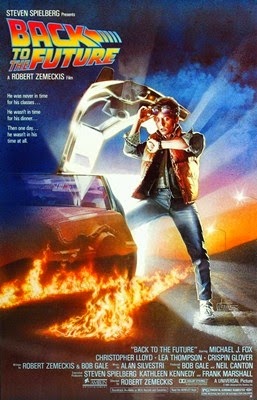
Anyway, one of the things that got me hooked was posts such as the one below involving my favorite movie of all-time, Back to the Future.

Enjoy.

Everything I Ever Needed to Learn about Technology Integration I Learned from "Back to the Future"


It is now time for the second installment of Everything I Ever Needed to Learn about Technology Integration I Learned from… The following quotes come from the first movie since many of the same lines are repeated in all three. I would like to thank everyone who took the time to vote and play a part in this silly venture by me. Here are the quotes and what I learned from them in no specific order.


George McFly: Last night, Darth Vader came down from planet Vulcan and told me that if I didn't take Lorraine out that he'd melt my brain.

I love helping other teachers integrate technology into their lessons. When teachers come to me and ask questions and want to know if there is anything out there that can improve what they already do, I get excited. However, there are still many teachers out there that do not and will not use new forms of technology in their classroom. Marty decided to scare his father into asking his mother out on a date. In schools, I’m not sure that fear is the best approach in getting teachers to try new things. Fear is what is usually keeping teachers away from new technology. I find it best to identify those teachers that might be resistant and slowly show them different ways new technology can be implemented into their lessons. Sometimes it takes only one piece of technology to get a teacher hooked and looking for other ways to spice up their lesson plans.

Marty McFly: Wait a minute, Doc. Ah... Are you telling me that you built a time machine... out of a DeLorean?

Dr. Emmett Brown: The way I see it, if you're gonna build a time machine into a car, why not do it with some style?

I find it funny when I have conversations with teachers and they talk about the great technology they use in the classroom and it turns out they have been using the same PowerPoint presentations since 1999. I agree with Doc Brown when he says, “…why not do it in style?” Go out and look for the best and the brightest technology out there and find a way to integrate it into the classroom. I recently moved my note taking lectures to Prezi and my kids love it. Last week, I added Wallwisher to my Prezis. I understand that this is not the path for everyone, but teachers should not be satisfied with the run of the mill. Go out and make a splash when you use technology.

Lou: You gonna order something, kid?
Marty McFly: Ah, yeah... Give me - Give me a Tab.
Lou: Tab? I can't give you a tab unless you order something.
Marty McFly: All right, give me a Pepsi Free.
Lou: You want a Pepsi, PAL, you're gonna pay for it.

Knowing your audience is important when it comes to convincing teachers to include more technology into their lessons. If you do not have common ground, they may have no idea what you are talking about. I saw this play out at my school recently. I started a blog for my school to identify helpful sites for teachers and students. My first post was about how to use the blog and I ended it with suggesting that teachers add my blog to their RSS Feed for easy following. I was hit with a bunch of emails asking me what RSS meant and how to use it. My follow up post was explaining RSS Feeds and how to use them. I forgot that not all of the teachers in my building knew all of the same terminology I did. I understood how frustrated Lou must have felt when this young kid was talking gibberish. I think it’s important to remember that frustration as I talk to other teachers.

Dr. Emmett Brown: I'm sure that in 1985 plutonium is available in every corner drugstore, but in 1955 it's a little hard to come by.

As I search for goodies on the world wide web, I often get frustrated when I find great sites, but my school blocks them for some unknown reasons or we do not have the correct plug-ins to view them. Also, I have sent some great sites to teachers that do not have the ability to look at them at home because their home set up is not able to handle it. High-powered technology is great for some teachers, but sometimes I need to remember to find the basic tools that all teachers will be able to use and try at home. Try to remember that all districts, sadly, were not created equal and we should try to find sites and new technology that is accessible to all classrooms.

Marvin Berry: [on the phone, as Marty plays "Johnny B. Goode"] Chuck. Chuck. It's Marvin - your cousin, Marvin BERRY. You know that new sound you're looking for? Well, listen to this.

Sharing is important. New technology does not search for teachers; teachers need to actively look for it themselves. Let’s be honest, some teachers are just not going to look for it. When I started this blog, my Twitter account and my school blog, it was because I wanted to share the great sites I found with the teachers of the world. If you find something that you think other teachers would like, do not hesitate to share it with as many people you want. If Marvin Berry never picks up the phone, think about all of the great music we would have missed.

Marty McFly: [following] What-what the heck is a gigawatt?

Don’t be afraid to ask questions if there is something new out there. Even though I think of myself as a tech savvy person, I have told myself it’s ok to ask questions of other people. Whether it’s on Twitter or another person in my building, if I have a question, I will ask. Even if you are the “tech guy/gal” of your building, don’t be afraid to ask questions of others.

Marty McFly: I guess you guys aren't ready for that, yet. But your kids are gonna love it.

Some teachers look at new technology and don’t understand how it will affect their lives. However, they need to understand that the new technology is not about directly impacting their lives, it’s about introducing new ideas to students who might take those tools and create amazing things with them. Teaching students with the same tools I was taught with is not going to help prepare them for college. (Side Note: I graduated HS in 1997 but never used email at school because we did not have it and never used the computer lab because we didn’t have one. Teachers didn’t even have computers in their room. I received a great education without them, but why would I want to go backward when I could have my students move forward?) It’s important to convince reluctant teachers that using new technology in the classroom is not about making the teachers better; it’s about preparing the students. (Side Note 2: My amazing wife, @JenniferPro, said this quote would be perfect for the post and she was right. Thanks!)

Needles – What are you, chicken?

Needles (played wonderfuly by Flea from the Red Hot Chili Peppers) does a great job at getting Marty to do what he wanted by calling him a chicken. Marty got into that car accident with the Rolls Royce and lost his job because he couldn’t ignore the name-calling. A simple, “Sticks and stones may break my bones but names will never hurt me” could have prevented all of his problems. I know that there are some teachers in my building that are not as open minded when it comes to using new technology in their classroom and delete my tech emails without even opening them, but I’m not going to let that dictate how I work. I will continue to send out the updates to help the teachers that want the help despite their silly comments.

Doc Brown: If you put your mind to it, you can accomplish anything.

This is just a great bit of advice from Doc. It applies to anyone in any field. I know I have said this to my students over the years and I truly believe it. Marty wants to become a Rock Star and with the help of the lyrics of Huey Lewis and the News, he can be a success. When I set out to use a new piece of technology I tell myself it is going to be a huge success and I will deal with any obstacles that arise. Think about Doc Brown the next time you plan to integrate new technology into the classroom.

I had a blast writing this post and I look forward to writing my next one. Thanks to IMDB for providing the exact quotes I needed.

- @TheNerdyTeacher

Wednesday, June 1, 2016

An Evening w/Rafe Esquith

To say I procrastinate on occasion is an understatement of epic proportions.  I blame a lot of this on my college roommate, Mike Butts, but I digress.

Back in November of 2011, my alma mater, Western Kentucky University (Go Tops!) hosted an evening with Rafe Esquith, who is a nationally-known teacher due to this books and accolades, including Teacher of the Year.  My wife and I drove over to Bowling Green to hear him speak that night and I took some brief notes on what he had to say.  I found that yellow legal pad in the process of Spring Cleaning this year and here are the notes…nearly four years later:

Rafe Esquith, along w/his beard
An Evening w/Rafe Esquith

1.) There are two rules in Rafe's classroom:

  • Work Hard
  • Be Nice
Why have so many rules that the kids can't possible remember?  Whenever you can, keep it simple.  

SIDENOTE: this is the reason I shortened my rules down to two: respect everyone and take pride in your work.  Pretty much the same thing. 

2.) Base classroom on TRUST, not FEAR.

Most kids in the old school way of classroom management were taught in a room filled with fear; one in which if you didn't say or do the right things, there was a paddle for your backside awaiting as punishment.  

In this day and age, it's a completely different world.  Rafe spends a few weeks at the beginning of each school year going over Kohlberg's Moral Development theory with his 5th graders.  He contends that a teacher will get far more out of children if they trust the teacher rather than fear him/her.  I agree.'

3.) Be Relevant

This was just a passing sentiment that is way too broad to cover here, but the one example he gave was based on classroom management website that treated the room as an economic system.  The website can be found at My Classroom Economy.

4.) Teach literature that makes real-life connections.

I don't know why someone, especially an ELA teacher, would ever do this, but it was in my notes.  So, there you have it.  

5.) It's okay to fail; it's not okay to not try.  

Of all the things Rafe said that night, this is the one that has stuck with the most, mainly this phrase: "each year, add something new.  Don't shrink the menu; keep adding to it."  For this year, it's #20Time or Genius Hour.  Here's to not shrinking the menu.

6.) Don't stop being you!

Rafe finds a way to inject himself into his classroom.  For example, he loves rock and roll and baseball; therefore, those items sneak their way into lessons.  Your passion is contagious.  Use that to your advantage.

7.) Create a safe haven in your class.  

Rafe's kids come from some pretty rough spots in Los Angeles, CA.  He committed long ago to ensuring that his room was a special place where all kids, regardless of background, socioeconomic status, etc. would be welcomed, loved, and accepted.

8.) True assessments are measured years after a student has left the classroom.

Rafe said he hopes that his students perform well on standardized tests; however, he followed that up with this gem: "if you went into teaching merely to raise test scores, what the heck is wrong with you?'

Amen, Rafe.

Thanks for the lessons.  Four years ago.

~Mr. D


Tuesday, May 31, 2016

IdeaPaint

About a year ago, my wife and I had a piece of furniture painted by the owner of Designer Depot in the Key Twin Shopping Center.  On the interior, she painted the panels of the piece with chalkboard paint, virtually turning the inside into a writable/erasable surface.  I had heard of chalkboard paint before and thought the idea sounded pretty cool.

Except for this: who the heck uses chalk anymore?

I mean, the last time I saw a piece of chalk was back in 4th grade when I was assigned to be the kid who took the erasers outside and bang them into oblivion, huffing loads of chalk dust along the way.  (I am still waiting to be involved in some sort of class action lawsuit on that one: "Teacher Cashes In Big Over Chalk Dust."  I'm looking at you, Heavy Hitter.)

But what about whiteboard paint?  Especially if one could paint it on clear to cover a surface without there being any detection of shenanigans?

Well, look no more: IdeaPaint is the thing!

I am thinking of painting my classroom door and perhaps the tops of some of my desks with this stuff.  Thoughts?  Is there anywhere else this could be useful?  Furthermore, when might this be used in the classroom?

I look forward to your comments below.  Have a good one!

~Mr. D

Friday, May 27, 2016

Summer Traditions

Phineas and Ferb lied: there are not 104 days of summer vacation, especially summers in Russell County after surviving a Snowpacolypse.  Due to a large amount of snow days in the Spring semester of last school year and a fairly early start date for this upcoming school year, we will seemingly have about 104 minutes of summer vacation.

Alas, despite the seeming brevity of our break, there are some things that I find myself doing each and every summer.  Since I love lists, I have compiled one for you below:
  1. Watching Back to the Future and every conceivable "extra" on the DVD box set my wife gave to me on our wedding day because why wouldn't I?
  2. Watching copious amounts of Boy Meets World  - deep down, I really want to be Mr. Feeny.  Just younger.
  3. Spending at least one day watching absurd amounts of old game shows on the Game Show Network - it reminds me of spending summer days at my MawMaw's house.  
  4. Going to both minor and major league baseball games.
  5. Listening to Kentucky Sports Radio every day, even though there really isn't a lot going on  in the world of Kentucky sports during the summer.
  6. Travelling - at least one new place in our great state of Kentucky, one new place in the U.S., and, hopefully when our children are a bit older, one new place in the world.
  7. Thinking of at least one thing to add to my classroom each year.
  8. Reading - I try to get in one book per week during the summer.  
  9. Drinking Arnold Palmers - half sweet tea, half lemonade.  Duh.  
  10. Playing golf - not that I am any good; I just love walking around nature while hitting things.  
What about you guys?  What are some of your summer traditions?

~Mr. D

Wednesday, May 25, 2016

Students: Things to Do This Summer

#1) Read.  A lot.  (Suggested Reading List coming tomorrow.)

#2) Write.  A lot.  (See above.  Except that list will be about writing, of course.)

#3) If not on Twitter, consider joining and following me (@TheMrDShow), as well as some of your other favorite people on the planet.  Trust me, it's entirely more intellectually stimulating that Facebook.

#4) Tell your parents about this blog and have them follow it.  This will save me from begging them to do so myself at Open House in early August.  

#5) Have tons of fun.  However, be careful and make wise decisions.  Both can be achieved.

#6) Try something that you never have done before.  

#7) Spend time focusing on, and doing some things for, people other than yourself. 

#8) Have a meaningful conversation with someone quite a bit older than you, like a grandparent or, for those fortunate enough, a great-grandparent.

#9) Travel.

#10) Come into next year ready to have the best educational experience known to this universe. Having a positive attitude is worth its weight in (insert precious metal here). Also, having materials would be nice.  (List coming soon.)

Think I missed something?  Add to the list by commenting below.

Word.

~Mr. D

Tuesday, May 24, 2016

Turn the Page

I hate winding down a school year; it all seems to go by with a blink.  I know, I know: people are elated to count down the days until school is over.  I readily admit that I keep track of such on my calendar.  But instead of a countdown, it may be more appropriate to count up towards a climactic resolution: the crescendo of all things good in education. However, the breakneck speed with which the end of the school year passes does not allow for appropriate sentiments and sendoffs.

Hence, this blog post.

First and foremost, I want to personally congratulate the two winners of my ELA awards: Megan Back and Sarah Beth Lawson.  It's always a rewarding feeling when I have a tough time selecting the award recipient.  Please believe me when I say the following: this year was the hardest selection I have ever had to make.  There were students that were LITERALLY separated by HUNDREDTHS of points in the overall grade column.  But Megan and Sarah Beth are more than worthy honorees of this year's ELA classes.

Secondly, this may look familiar to some but I wanted to post these tidbits of parting advice for everyone to see:

1.      Defy apathy – It probably seems right now (at age 14, entering high school) that the process to get from where you are to where you want to be is a daunting one.  A generalized response to such a lengthy and challenging endeavor is to simply quit.  The act of giving up on your dreams can be justified by a creeping sense of apathy, a general “I don’t care” attitude.  Fight it.  Fight it with everything you have in you.  If there are people in your life who are feeding this monster, get away from them.  Do not be influenced by people in your life who are miserable with their own.  There are tons of people counting on you, people you don’t even know: future friends, future mate, future children, and, most importantly, your future self. 

2.      Embrace learning – Not just in school, for grades, but for you; try to learn something new every day.  And if people refer to you as a nerd, dork, geek, goody two-shoes, etc., embrace that, too.  Those monikers are titles for those in the future who GET PAID. 

3.      Love people – all people.  A wise man once said, “it is better to give than receive.”  When we love others, we are taking the self-centered focus off of us and shifting that to someone else.  There is nothing better.  I challenge you to love people better than you do anything else.  I promise you – you will not be sorry. 

If you would, I want to invite all of you to follow this blog to receive updates of future blog posts.  I would love to hear your comments/advice/reflections throughout the summer and even into next school year.  To follow, simply scroll down to the bottom right-hand corner of this screen, click on FOLLOW THIS PAGE, and follow the directions from there.  

Thank you for being you.  

"What can say more than this rich praise: that you alone are you?" 
                                                                              ~ William Shakespeare

~Mr. D